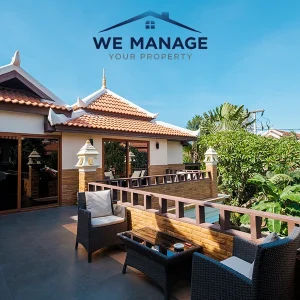
Pattaya is Thailand’s second-largest market for foreign condo ownership and one of the most actively managed. According to REIC Thailand data, Pattaya (Chonburi province) accounts for approximately 33% of all foreign condominium purchases in Thailand, making it a city where the question of professional property management isn’t optional for most overseas investors it’s essential.
But Pattaya works differently from Bangkok. The tenant pool is different, the rental strategies are different, the management challenges are different, and the gap between a well-managed and a poorly-managed property is wider here than almost anywhere else in Thailand. This guide explains exactly what property management in Pattaya involves for foreign investors in 2026 and what to look for before you hand your keys to anyone.
Why Is Pattaya Such a Popular Market for Foreign Property Investors?
Several factors make Pattaya attractive specifically for foreign buyers who plan to rent out their units:
- Strong rental yields – gross yields of 5%–8% for condos, depending on area and unit type, comparing well against most European coastal markets and other major Asian cities
- Affordable entry prices – average condo prices of approximately ฿70,000 per sqm make Pattaya significantly more accessible than Bangkok’s prime zones
- Year-round demand – unlike purely seasonal beach markets, Pattaya maintains consistent occupancy driven by weekend visitors from Bangkok (just 90 minutes away), long-term expat residents, and international tourists
- Infrastructure growth – the Eastern Economic Corridor (EEC) development and planned high-speed rail connections to Bangkok and U-Tapao Airport are driving long-term capital appreciation expectations alongside yield
- Simple ownership structure – foreign freehold ownership of condos under the 49% quota works the same in Pattaya as in Bangkok; see our guide to property management for foreign-owned condos for the legal detail
Who Rents Properties in Pattaya?
Understanding Pattaya’s tenant pool is the foundation of any management decision:
Short-term holiday renters – tourists and weekend visitors from Bangkok seeking beachside accommodation. These drive high daily rates, particularly in beachfront condos near Wongamat or Jomtien, but require constant management guest communication, cleaning turnovers, and calendar management and depend heavily on occupancy during peak seasons.
Long-term expat residents – retirees, remote workers, and digital nomads who choose Pattaya as a permanent or semi-permanent base. These tenants sign 6–12 month leases, require less daily management, and are concentrated in quieter, well-connected areas like Pratumnak Hill and Naklua rather than the central tourist strip.
Domestic Thai renters and Bangkok weekenders – increasingly significant as Pattaya’s infrastructure improves, driving demand in mid-market and East Pattaya developments.
Corporate and EEC-related tenants – with the Eastern Economic Corridor attracting manufacturing and logistics companies, a growing pool of corporate tenants and their employees are seeking managed accommodation in the greater Pattaya area.
This is a fundamentally different mix from Bangkok, where the tenant base is dominated by expat professionals on company contracts. In Pattaya, your management strategy must match the tenant type your property can realistically attract – and that depends heavily on location, building quality, and furnishing standard.
What Are the Rental Yield Expectations for Foreign Investors in Pattaya?
Based on current 2026 market data, Pattaya gross rental yields by area and strategy look like this:
| Area / Strategy | Typical gross yield | Tenant profile |
|---|---|---|
| Wongamat (luxury beachfront) | 5%–7% | Affluent tourists, long-stay expats |
| Pratumnak Hill | 5%–7% | Quality long-term tenants, owner-occupiers |
| Jomtien / Na Jomtien | 6%–8% | Mixed tourist and expat residential |
| East Pattaya | 6%–8% | Domestic, mid-market, growing expat base |
| Central Pattaya (short-term) | 7%–10% | Holiday renters (higher management cost) |
Net yield after management fees, maintenance, vacancy, and common area costs typically runs 1.5%–2.5% below gross meaning a 7% gross yield realistically delivers 4.5%–5.5% net for a well-managed unit. For a broader Thailand yield comparison by city, see our Bangkok condo rental yield guide.
What Does Property Management Cost in Pattaya?
Property management fees for rental properties in Pattaya generally range from 10%–20% of rental income, with 15% being the typical market average for a full-service arrangement. This is somewhat higher than Bangkok’s typical 8%–15% range, reflecting the greater operational intensity of managing Pattaya’s mix of short-term holiday lets and long-term tenancies.
Full cost breakdown for a typical Pattaya investment unit:
| Cost item | Typical range |
|---|---|
| Monthly management fee | 10%–20% of rent collected |
| Tenant-finding / letting fee | 0.5–1.5 months’ rent |
| Common area maintenance (CAM) | ฿2,000–฿8,000/month (building-dependent) |
| Maintenance and repairs | ฿15,000–฿40,000/year (ongoing average) |
| Thai income tax on rental | 5%–35% (progressive rate, with allowable deductions) |
| Property insurance | ฿1,000–฿3,000/year (basic condo coverage) |
For a plain-English breakdown of how management fees are structured and what they should cover, see our Bangkok condo management fees explained guide the fee structures and what to look for in a contract apply equally to Pattaya.
Short-Term vs Long-Term Rental in Pattaya
This is the central decision for every Pattaya investor and it’s more consequential here than in Bangkok:
Short-term rental (holiday lets) produces higher gross revenue per night but carries significant risks in Pattaya. Thailand’s Hotel Act 2004 technically requires properties offering stays under 30 days to hold a hotel licence. Enforcement has historically been inconsistent, but building juristic offices in Pattaya increasingly prohibit short-term letting explicitly in their bylaws regardless of whether the city enforces the Hotel Act. Always verify your building’s specific rules before listing on any platform.
Long-term rental (6–12 month leases) delivers lower gross yield per month but significantly lower management intensity, more predictable income, and none of the Hotel Act compliance risk. For overseas investors who can’t be present in Pattaya, this is typically the more sustainable strategy.
The honest assessment: many Pattaya properties marketed with “guaranteed returns” of 8%–10% are projecting short-term holiday yield figures without disclosing management costs, vacancy risk, or Hotel Act exposure. Net long-term yield of 4.5%–5.5% on a well-located unit, managed professionally, is a more realistic and more sustainable target for most foreign investors.
For a full strategy comparison, see our guide to long-term vs short-term rentals in Thailand.
What Should Foreign Investors Look for in a Pattaya Property Manager?
The Pattaya property management market includes a wide range of operators from large multi-building firms to informal “rent my neighbour’s condo” arrangements. For a foreign investor managing remotely, the key criteria are:
- Explicit TM30 compliance – as in Bangkok, TM30 immigration filing is legally required within 24 hours of any foreign national tenant’s move-in. Confirm this is included in writing.
- Clear short-term vs long-term capability – some managers specialise in one or the other; ensure yours can manage the strategy your unit is suited for
- Transparent fee structure – get a complete written fee schedule including what happens during vacancy, how maintenance markups work, and how overseas transfers are handled
- Building bylaw knowledge – a good Pattaya manager knows which buildings allow short-term letting and which don’t, before you sign a management contract
- Regular English-language reporting – essential for overseas investors who can’t verify performance in person
- Verifiable track record – ask for occupancy rates and average void periods on comparable units they currently manage
FAQ:
Can foreigners own and rent out property in Pattaya?
Yes. Foreign nationals can purchase condo units in Pattaya on a freehold basis under the 49% foreign quota, the same structure as Bangkok. These units can be rented out long-term or where building bylaws permit short-term.
What rental yield can I realistically expect from a Pattaya condo?
Gross yields of 5%–8% depending on area and rental strategy. Net yield after management fees, maintenance, and vacancy typically lands at 4%–5.5%. Short-term holiday lets can push gross yields higher but carry greater management cost and compliance risk.
Is short-term Airbnb rental legal in Pattaya?
Under Thailand’s Hotel Act 2004, rentals under 30 days technically require a hotel licence. Enforcement varies, but many Pattaya condo buildings now explicitly prohibit short-term letting in their bylaws. Always check your specific building’s rules before listing.
How much does property management cost in Pattaya?
Typically 10%–20% of rental income as a monthly management fee, plus a tenant-finding fee of 0.5–1.5 months’ rent per new tenancy. The 15% monthly rate is the Pattaya market average for full-service management.
What is TM30 and do I need to worry about it in Pattaya?
Yes, TM30 applies nationwide, not just Bangkok. Landlords must file an immigration notification within 24 hours whenever a foreign national tenant moves in. Non-compliance fines range from ฿800 to ฿2,000+ per incident. Confirm TM30 handling is explicitly included in any management contract.
How is managing a Pattaya investment different from a Bangkok condo?
Pattaya’s tenant pool is more tourist-dependent and the short-term vs long-term decision is more significant than in Bangkok. Management fees are typically slightly higher (averaging 15% vs 8%–12% in Bangkok), and building bylaw restrictions on short-term letting are increasingly common.
Own a Property in Pattaya and Need It Managed Professionally?
If you’ve invested in a Pattaya condo and want it managed by a team that understands the compliance requirements, tenant dynamics, and rental strategy decisions specific to the Pattaya market, We Manage Your Property works with overseas investors and foreign owners across Thailand’s major residential markets.